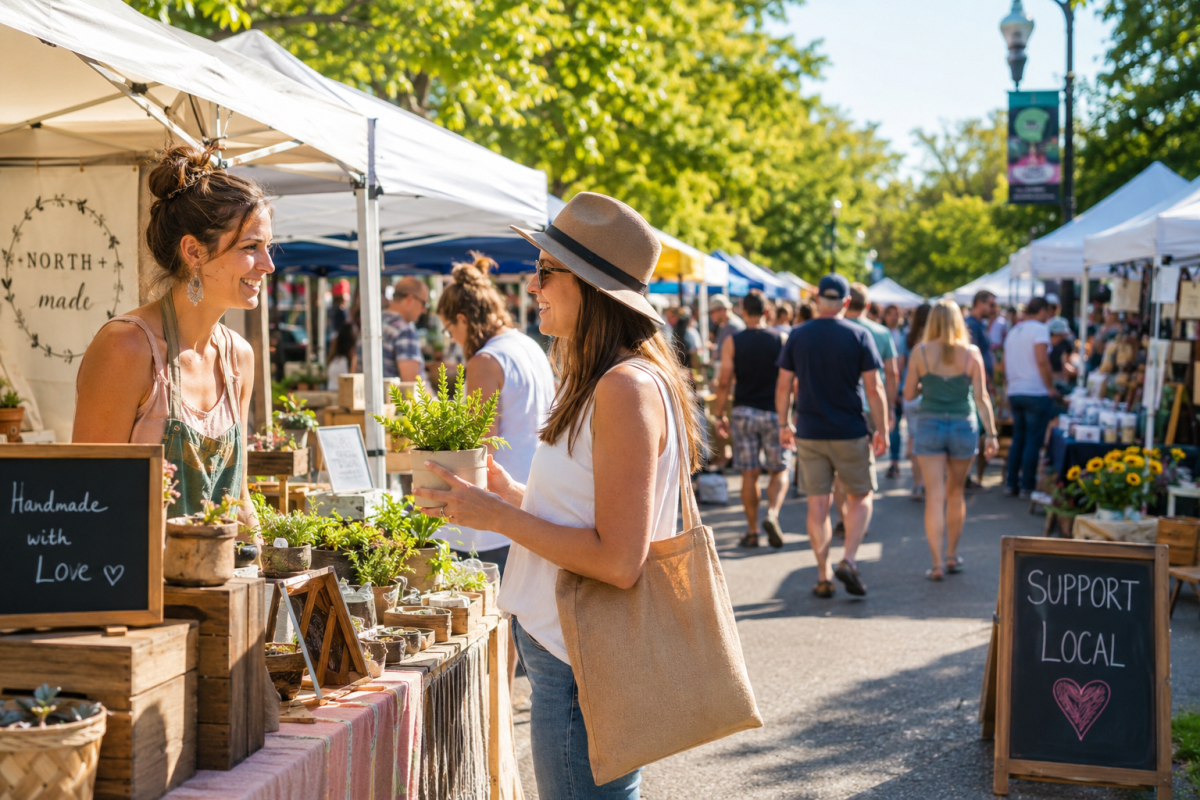
Summer market season is here. Farmers markets, craft fairs, and makers markets across the country are opening their doors, and vendors who planned ahead are already locking in their best events for June through September. Vendors who haven't started planning yet still have time — but the window is closing fast for the most competitive events.
The 2026 season brings a few notable shifts that vendors should be aware of. Application timelines are moving earlier, scam risks are higher than ever, and the markets that invest in professional vendor management are pulling ahead of the ones that still run on Facebook posts and Google Forms. Here's what to know heading into the busiest selling season of the year.
Application Deadlines Are Earlier Than You Think
One of the biggest mistakes vendors make heading into summer is assuming they can apply to events a few weeks before they happen. For smaller weekly farmers markets, that's sometimes true. For larger craft fairs, annual festivals, and curated makers markets, the application window often closes months in advance.
Many of the best fall and holiday markets — the events where vendors make 40 to 60 percent of their annual revenue — close applications in June or July. That means summer isn't just about selling at summer events. It's about applying to the events that will define the second half of the year.
The practical takeaway is to build an application calendar now. List every event worth applying to through the end of the year, note the application deadlines, and work backward from there. Vendors who treat applications as a weekly task rather than a last-minute scramble consistently land better events.
Local Market lists application deadlines and event details for verified markets, making it easier to plan a full season without hunting across dozens of Facebook pages and websites. Building a season calendar from verified listings saves time and reduces the risk of applying to events that turn out to be fake or poorly run.
The Scam Problem Is Getting Worse
Summer is peak season for vendor event scams. As more markets open and more vendors search for events to apply to, scammers ramp up their activity. The pattern is well-documented at this point: fake Facebook event pages impersonating real markets, Google Form applications that collect vendor information and fees, payment demanded through Zelle, Venmo, Chime, or Cash App, and organizer impersonation through emails and texts.
In March 2026, the Michigan Attorney General issued a public warning about fake Facebook event pages targeting vendors statewide. The warning specifically called out scammers who copied the names and branding of established art fairs and festivals to collect booth fees from vendors who believed they were applying to real events.
This isn't a regional problem — it's happening everywhere, and summer is when it peaks because the volume of real events creates more cover for fake ones. Vendors searching for summer markets on Facebook or through general Google searches are the most vulnerable because those channels have no verification layer.
Before applying to any event this summer, take 10 minutes to verify it. Confirm the organizer's identity through their official website, call the venue to confirm the event is scheduled, and be suspicious of any event that only accepts payment through peer-to-peer apps. For a detailed walkthrough of the verification process, read our guide on how to verify a vendor event before you apply.
The safest approach is to find events through platforms that verify organizers before listing them. Every event listed on Local Market goes through a verification process — organizer identity, venue confirmation, and event details are all checked before vendors can apply. That verification eliminates the most common scam vectors and gives vendors confidence that the event they're applying to is real.
Summer Weather Means Having a Backup Plan
Outdoor summer markets come with heat, humidity, sudden thunderstorms, and the occasional extreme weather event. Vendors who don't plan for weather end up with damaged inventory, lost sales days, and wasted booth fees.
The essentials for summer weather preparedness include a quality canopy or tent rated for wind (cheap pop-ups from big box stores are the number one cause of vendor property damage at markets), tent weights heavy enough for the conditions (at least 25 pounds per leg for most events, more for open or elevated locations), a plan for securing products in sudden wind, sun protection for both the vendor and heat-sensitive products, and plenty of water.
Heat affects products differently depending on the category. Chocolate, candles, soaps, baked goods, and anything with a low melting point needs shade and possibly a cooling solution.
Produce needs to stay fresh and attractive despite high temperatures. Printed materials fade and curl in direct sun. Planning product placement around heat and sun exposure is a detail that separates experienced summer vendors from first-timers.
Know the market's cancellation policy before the season starts. Some markets cancel for weather and offer refunds or credits. Some are rain-or-shine with no refund. Some leave the decision to individual vendors. Understanding the policy in advance prevents frustration and financial surprises on a rainy Saturday morning.
Inventory Planning for Peak Season
Summer is the highest-volume season for most vendor categories, and running out of inventory mid-season is one of the most common and costly mistakes. The vendors who have the best summers are the ones who planned their production schedule in April and May.
For vendors who haven't started building summer stock yet, the priority should be identifying the top 5 to 10 best-selling products and producing as much of those as possible. Summer isn't the time to experiment with new product lines — it's the time to sell what already works. Save the experimentation for smaller, lower-stakes events or for testing one new product per market alongside the proven lineup.
Track inventory meticulously this summer. Record what sells at each event, what doesn't, what time of day sales peak, and which products attract the most attention even if they don't convert to sales. This data is invaluable for planning fall and holiday inventory, which should start in July or August at the latest. Vendors who wait until October to start building holiday stock are already behind.
The relationship between inventory depth and booth presentation matters more at summer markets because foot traffic is higher and browsing windows are shorter. A booth that looks full and abundant attracts more shoppers than one that looks picked over, even if both have the same number of products. Bring more than expected and display it so the booth looks stocked throughout the day.
Make the Most of Long Summer Days
Summer markets often run longer hours than spring or fall events, and the extended daylight means more foot traffic later in the day. Vendors who pack up early leave money on the table.
Many markets have rules about early breakdown — leaving before the market officially closes. Violating these rules can result in being banned from future events, and for good reason: when one vendor starts packing up, it signals to shoppers that the market is winding down and reduces foot traffic for every other vendor who's still selling. Stay until close, even if sales have slowed. Some of the best sales happen in the last hour when shoppers who've been browsing all day finally decide to buy.
The longer days also mean more time in the sun, which takes a physical toll. Vendor fatigue is real and it affects sales. Tired vendors don't engage as well, don't smile as much, and don't sell as much. Bring enough food and water for the full day, take breaks when traffic is light, and consider bringing a helper for the busiest days. The cost of paying someone $50 to $100 to help at a busy summer market is almost always recovered in additional sales from better energy and customer engagement.
Use Summer to Build Relationships
Summer markets are the best time of year to build the relationships that pay off for the rest of the season and beyond. The vendor community is most active in summer, and the connections made during peak season often lead to recommendations, shared information about upcoming events, and collaborative opportunities.
Get to know the other vendors at every market. The vendor in the booth next to yours at a July farmers market might be the person who tells you about an amazing holiday market that doesn't advertise publicly. Vendor networks are the most reliable source of information about which events are worth doing, which organizers are professional, and which markets to avoid.
Build relationships with organizers too. Introduce yourself, be professional, follow the market's rules, and stay until close. Organizers remember vendors who make their job easier, and those vendors get invited back first next season. A short thank-you email after a market goes a long way — most vendors never bother, so the ones who do stand out immediately.
Most importantly, build relationships with customers. Collect email addresses. Hand out business cards with social media handles. Tell people about upcoming markets where they can find you again. The customer who buys a $20 candle at a June farmers market and joins your email list might become a $200 holiday gift buyer in December. Summer is when those relationships start.
Having a strong vendor profile on Local Market helps vendors stay visible to organizers and customers between events. A verified profile with product photos, a description of what you sell, and your upcoming event schedule gives people a way to find and follow you beyond the individual markets you attend.
Start Planning for Fall Now
The single most important thing vendors can do this summer to set up a strong second half of the year is to start planning for fall and holiday season immediately. The best fall events close applications by mid-summer. Holiday market applications often close even earlier.
Build a hit list of fall and holiday events worth applying to. Research them now while summer events are keeping you busy — it's easy to let application deadlines slip by when every weekend is packed with markets. Set calendar reminders for every deadline so nothing gets missed.
Start building holiday inventory in July or August. The number one mistake vendors report is starting holiday production too late. By October, most vendors are doing fall shows every weekend and have no time to produce additional stock. The vendors who enter the holiday season with deep inventory and a full calendar of events are the ones who finish the year strong.
Use summer sales data to guide fall and holiday planning. Products that sell well at summer markets are likely to sell well as gifts during the holiday season, but quantities need to be significantly higher — vendors typically need three to five times their normal inventory levels for holiday markets. Start tracking now so the production plan is data-driven rather than a guess.
Browse upcoming fall and holiday events on Local Market to start building your calendar. Every event is verified, so the time spent applying goes toward real opportunities rather than wasted applications to events that may not exist.
Making 2026 Your Best Season Yet
Summer 2026 is shaping up to be one of the busiest market seasons in recent years. More events are running, more shoppers are seeking out local vendors, and the vendor community continues to grow. The opportunity is real, but so are the challenges.
The vendors who will have the best summer are the ones who plan their applications early, verify every event before applying, prepare for weather, manage their inventory strategically, engage with shoppers authentically, and build the relationships that compound over time.
Most importantly, they're the ones who treat vending as a real business, not a weekend hobby. Track the numbers. Plan the calendar. Invest in the booth. Protect against scams. Build for the long term.
The summer season is short. Make every market count.
Ready to find verified summer events to apply to? Browse verified vendor events on Local Market — every event is vetted, every organizer is verified, and every application is secure. Join the Local Market community today →